What is a candidate journey and why it matters in 2026

Hiring managers often assume candidate journey is just another HR buzzword, yet 80% of applicants receive timely updates when companies prioritise this process. Understanding how candidates experience your recruitment from first contact to onboarding transforms hiring outcomes. This guide clarifies what candidate journey truly means, why mapping it matters for European recruiters, and how to design journeys that attract top talent whilst meeting 2026 compliance standards. You’ll discover practical frameworks for creating personas, optimising mobile experiences, and navigating EU AI regulations that directly impact your recruitment technology choices.
Table of Contents
- Understanding The Candidate Journey: Definition And Importance
- Designing An Effective Candidate Journey With Personas And Mapping
- Enhancing Candidate Journey Experience With Communication And Technology
- Navigating The Legal And Ethical Landscape Of Ai In Recruitment In Europe
- Boost Your Hiring Process With Ai-Powered Candidate Journey Insights
- Frequently Asked Questions
Key takeaways
| Point | Details |
|---|---|
| Journey mapping reveals pain points | Visualising touchpoints helps identify where candidates struggle or disengage during your hiring process |
| Personas tailor recruitment strategy | Creating detailed candidate profiles enables you to customise communications and assessments for different talent segments |
| Mobile optimisation is non-negotiable | European job seekers increasingly use mobile devices, making responsive design essential for application completion |
| EU AI Act demands transparency | High-risk AI recruitment tools must meet strict fairness and disclosure requirements under 2026 regulations |
| Timely communication reduces drop-off | Regular status updates significantly improve candidate satisfaction and protect your employer brand |
Understanding the candidate journey: definition and importance
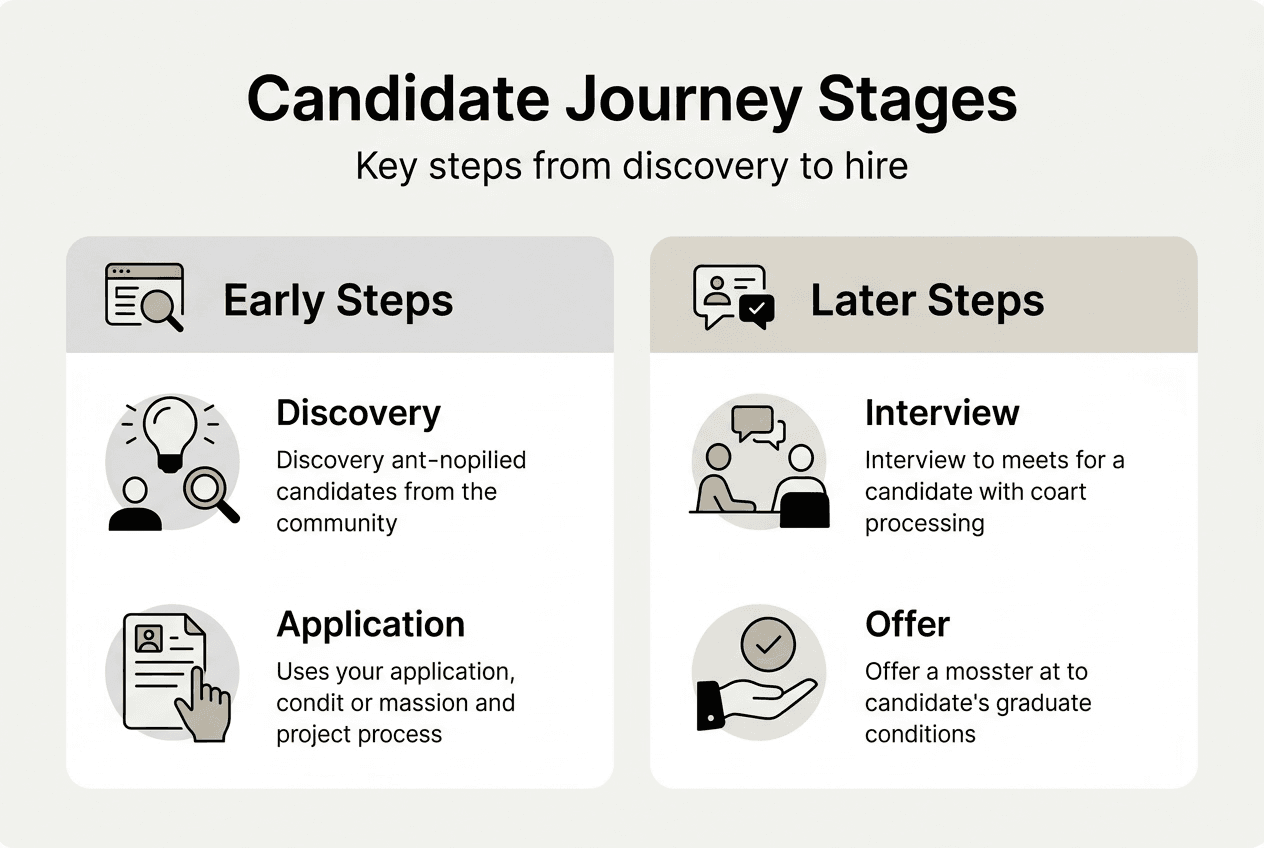
The candidate journey encompasses every interaction a potential hire has with your organisation, from discovering your job posting to completing onboarding. This journey isn’t linear. Candidates research your company culture, read employee reviews, submit applications, complete assessments, attend interviews, and evaluate your offer, all whilst forming impressions that influence their decision to join or decline.
A candidate journey map helps visualise and improve the candidate experience by documenting each stage and touchpoint. Mapping reveals where candidates encounter friction, confusion, or delays that damage their perception of your organisation. When you understand these pain points, you can redesign processes to remove barriers and create smoother transitions between stages.
Typical journey stages include awareness (discovering your opportunity), consideration (evaluating fit), application (submitting materials), assessment (completing tests or interviews), decision (receiving and reviewing offers), and onboarding (transitioning into the role). Each stage contains multiple touchpoints such as career site visits, email communications, assessment platforms, video interviews, and hiring manager interactions.
The relationship between improved candidate journey and hiring success is direct. Candidates who experience clear communication, respectful treatment, and efficient processes are more likely to accept offers and recommend your company to others. Poor experiences generate negative reviews that deter future applicants, whilst excellent journeys strengthen your employer brand and expand your talent pipeline.
“Candidates remember how you made them feel during recruitment long after they’ve forgotten specific interview questions.”
Recognising emotional and practical pain points requires gathering feedback at each stage. Common issues include:
- Unclear job descriptions that waste applicants’ time
- Lengthy application forms requesting redundant information
- Assessment tools that feel irrelevant to the role
- Communication gaps leaving candidates uncertain about their status
- Interview processes that lack structure or professionalism
Addressing these challenges directly impacts your candidate experience impact metrics. When you eliminate friction, you reduce drop-off rates, improve quality of hire, and decrease time to fill positions. The investment in journey mapping pays dividends through better hiring outcomes and stronger talent relationships.
Designing an effective candidate journey with personas and mapping
Candidate personas represent fictional profiles of your ideal hires, built from real data about demographics, behaviours, motivations, and preferences. Defining candidate personas is crucial for tailoring the candidate journey because different talent segments have distinct needs and expectations. A graduate seeking their first role approaches your process differently than a senior professional considering a career change.
Building detailed personas requires gathering intelligence from multiple sources:
- Analyse your current workforce to identify common characteristics of successful hires
- Interview recent candidates about their experience and decision-making factors
- Review application data to understand where different segments drop off
- Survey hiring managers about the traits and backgrounds they value most
- Research industry benchmarks for typical candidate behaviours in your sector
Each persona should include specific attributes such as career stage, technical skills, location preferences, salary expectations, values, and communication preferences. The more detailed your personas, the better you can customise touchpoints to resonate with each segment.
Mapping aligns these personas with journey stages by documenting how each segment experiences your process. A junior developer persona might prioritise quick application completion and skill-based assessments, whilst a senior leadership persona expects personalised outreach and opportunities to meet team members. Understanding these differences enables you to design parallel journeys that serve multiple talent pools effectively.

| Persona | Primary motivation | Preferred communication | Key pain point | Assessment priority |
|---|---|---|---|---|
| Graduate tech talent | Skill development | Instant messaging | Lengthy forms | Coding challenges |
| Mid-career professional | Work-life balance | Email with clear timelines | Vague job descriptions | Cultural fit tests |
| Senior leadership | Strategic impact | Direct phone contact | Impersonal processes | Case study presentations |
| Career changer | Purpose alignment | Video explanations | Uncertainty about fit | Transferable skills evaluation |
Pro Tip: Avoid creating generic personas that describe everyone and no one. The more specific your personas, including details like preferred social platforms or typical job search triggers, the more effectively you can target communications and candidate assessment tools impact their experience. Test your personas by asking whether you could pick them out in a room of candidates based on the profile details.
Once you’ve mapped personas to stages, identify specific interventions that improve candidate matching improvement for each segment. Graduate personas might benefit from explainer videos about your assessment process, whilst senior personas appreciate executive summaries of your company strategy. Customising content and communication style demonstrates respect for candidates’ time and preferences, significantly improving engagement rates.
Enhancing candidate journey experience with communication and technology
Timely communication stands as the most influential factor in candidate satisfaction. Schneider Electric improved candidate communication by ensuring at least 80% of new applicants receive timely updates about their status, resulting in measurably higher engagement and acceptance rates. Candidates who receive regular updates, even when news is neutral or negative, report more positive experiences than those left in uncertainty.
Effective communication throughout the journey requires establishing clear expectations at each stage. Tell candidates when they’ll hear from you, what the next steps involve, and how long each phase typically takes. When delays occur, proactive updates prevent frustration and demonstrate professionalism. Automated email sequences can maintain contact whilst allowing recruiters to focus on high-value interactions.
Mobile device usage fundamentally shapes how European candidates interact with your recruitment process. Mobile optimisation of the candidate journey is essential, given the high mobile usage rates in Europe, where job seekers increasingly research opportunities, submit applications, and complete assessments on smartphones. A journey designed primarily for desktop computers creates immediate barriers for mobile users.
Essential elements of mobile-optimised design include:
- Responsive application forms that adjust to screen size
- One-click apply options using LinkedIn or similar profiles
- Mobile-friendly assessment interfaces with touch-optimised controls
- Video interview platforms that work reliably on smartphone cameras
- SMS or app-based notifications for time-sensitive updates
Artificial intelligence tools transform candidate journey efficiency when implemented thoughtfully. AI recruitment screening can analyse applications faster than human reviewers, schedule interviews automatically, and provide candidates with instant feedback on assessments. However, AI in recruitment 2026 operates under strict EU regulations that mandate transparency and fairness.
The EU AI Act, effective 2025, classifies recruitment AI as high-risk technology requiring human oversight, bias testing, and clear disclosure to candidates. You must inform applicants when AI influences hiring decisions and provide opportunities to challenge automated assessments. AI transparency and ethics aren’t optional considerations but legal requirements that shape how you deploy recruitment technology.
Pro Tip: Consistently update candidates within 48 hours of each journey stage completion, even if the update is simply confirming receipt and outlining next steps. This practice alone reduces drop-off rates and negative reviews more effectively than elaborate technology implementations. Set calendar reminders or use recruitment software triggers to ensure no candidate experiences communication gaps.
Navigating the legal and ethical landscape of AI in recruitment in Europe
The EU AI Act categorises AI systems used in recruitment as high-risk, subjecting them to stringent requirements for safety, fairness, and transparency. This classification reflects the significant impact hiring decisions have on individuals’ livelihoods and the potential for algorithmic bias to perpetuate discrimination. Understanding these regulations isn’t optional for European HR managers deploying AI tools in 2026.
Key legal requirements under the Act include rigorous testing for bias before deployment, maintaining human oversight of AI decisions, providing clear explanations of how AI influences outcomes, and enabling candidates to contest automated assessments. Vendors supplying AI recruitment tools must demonstrate compliance through technical documentation and conformity assessments, but ultimate responsibility rests with you as the deploying organisation.
Potential risks and compliance challenges include algorithmic bias that disadvantages protected groups, data protection violations when AI processes sensitive personal information, lack of transparency that leaves candidates unable to understand rejection reasons, and over-reliance on automation that removes meaningful human judgment from hiring decisions. Each risk carries legal liability and reputational damage.
| Aspect | Pre-AI Act approach | Post-AI Act requirement |
|---|---|---|
| Bias testing | Optional vendor claims | Mandatory documented testing across protected characteristics |
| Candidate disclosure | Often hidden or vague | Clear explanation of AI role in decisions |
| Human oversight | Frequently minimal | Required human review of AI recommendations |
| Right to challenge | Rarely provided | Must enable candidates to contest automated assessments |
| Data protection | Standard GDPR compliance | Enhanced safeguards for AI processing of personal data |
Transparency with candidates builds trust whilst meeting legal obligations. Inform applicants at the application stage which AI tools you use, what data these tools analyse, and how results influence your hiring decisions. Provide contact information for candidates who want to discuss AI assessments or request human review. This openness demonstrates respect and reduces anxiety about algorithmic decision-making.
Best practices to ensure ethical AI use include:
- Regularly audit AI tools for bias across gender, age, ethnicity, and other protected characteristics
- Train hiring managers to interpret AI recommendations critically rather than accepting them automatically
- Maintain detailed records of AI decisions to demonstrate compliance during regulatory reviews
- Partner with vendors who prioritise fairness and provide transparent documentation
- Establish clear escalation procedures when candidates question AI assessments
- Combine AI efficiency with human judgment at critical decision points
The AI role in recruitment continues expanding, making compliance knowledge essential for competitive advantage. Organisations that master AI ethics and transparency whilst leveraging AI efficiency will attract candidates who value fairness and professionalism. Those who ignore regulations face legal penalties and talent pipeline damage that far outweigh any short-term efficiency gains.
Boost your hiring process with AI-powered candidate journey insights
Transforming your recruitment from CV screening to genuine candidate validation requires technology that balances efficiency with fairness. We Are Over The Moon’s platform replaces traditional application reviews with AI-driven assessments that evaluate real skills, cultural fit, and potential. Our tools include AI interviews, company-specific challenges, cognitive tests, and video pitches that reveal candidate capabilities CVs cannot capture.
The platform enables you to match on skills not CVs, ensuring every candidate receives fair evaluation based on demonstrated abilities rather than background credentials. This approach improves hiring quality whilst creating candidate journeys that feel engaging and relevant. Our AI candidate validation platform meets EU AI Act requirements through transparent processes, bias testing, and human oversight integration.
Discover how about We Are Over The Moon helps European organisations elevate recruitment outcomes through technology aligned with 2026 regulations. When you combine journey mapping insights with AI-powered assessments, you create hiring processes that attract top talent, improve efficiency, and protect your employer brand.
Frequently asked questions
What exactly is a candidate journey in recruitment?
A candidate journey is the complete experience someone has with your organisation from first discovering a job opportunity through to completing onboarding. It includes every touchpoint such as researching your company, submitting applications, completing assessments, attending interviews, and evaluating offers. Mapping this journey helps identify where candidates struggle or disengage.
How do I create effective candidate personas for journey mapping?
Start by analysing your current successful hires to identify common characteristics, then interview recent candidates about their experience and motivations. Include specific details like career stage, technical skills, communication preferences, and key pain points in your hiring process. Test personas by asking whether you could distinguish them from other candidates based on the profile attributes.
Why is mobile optimisation critical for candidate journeys in Europe?
European job seekers increasingly use mobile devices to research opportunities, submit applications, and complete assessments. If your process requires desktop computers, you create immediate barriers that cause qualified candidates to abandon applications. Responsive design, one-click apply options, and mobile-friendly assessment interfaces are essential for reaching today’s talent pools.
What are the main EU AI Act requirements for recruitment tools?
The Act classifies recruitment AI as high-risk, requiring rigorous bias testing, human oversight of decisions, clear disclosure to candidates about AI use, and the right for applicants to challenge automated assessments. You must maintain documentation proving compliance and ensure AI tools don’t perpetuate discrimination against protected groups. Transparency about how AI influences hiring decisions is legally mandatory.
How does timely communication improve candidate journey outcomes?
Candidates who receive regular status updates report significantly higher satisfaction even when news is neutral or negative. Communication gaps create anxiety and frustration that damage your employer brand and increase drop-off rates. Updating applicants within 48 hours of each stage completion demonstrates professionalism and respect, making candidates more likely to accept offers and recommend your organisation.
What mistakes should I avoid when designing candidate journeys?
Avoid creating generic personas that don’t reflect real candidate segments, neglecting mobile users, implementing lengthy application forms, using assessments that feel irrelevant to roles, leaving communication gaps, and deploying AI tools without understanding compliance requirements. Each mistake creates friction that drives qualified candidates toward competitors with better-designed processes.
Recommended
- What Is Candidate Experience and Its Impact on Hiring | We Are Over The Moon
- Qualities of top candidates: innovative assessment methods for HR leaders 2026 | We Are Over The Moon
- Why prioritising candidate potential drives better hiring | We Are Over The Moon
- Defining Candidate Matching: Boosting Hiring Success | We Are Over The Moon