Pros and cons of AI hiring: A practical guide for HR teams

TL;DR:
- European HR teams must carefully evaluate AI hiring tools for fairness, GDPR compliance, and effectiveness.
- AI offers speed, consistency, and predictive insights but risks bias, lack of transparency, and candidate disengagement.
- Use AI as a supporting layer, monitor bias regularly, and blend automated screening with human judgment for best results.
Hiring the right person has never been simple, but AI has added a thrilling new dimension to the challenge. European HR teams are under real pressure to modernise, cut time-to-hire, and demonstrate fairness, all while staying firmly inside GDPR boundaries. It is genuinely exciting territory, but it comes with questions worth asking carefully. This article walks you through the key criteria for evaluating AI hiring tools, the strongest pros and cons, and a practical comparison to help you decide where AI fits best in your process. Whether you run an in-house HR function or a busy recruitment agency, you will find clear, actionable guidance here.
Table of Contents
- Key criteria for evaluating AI in hiring
- Pros of AI hiring: Efficiency, reach, and insights
- Cons of AI hiring: Bias, explainability, and candidate reactions
- Comparing AI hiring: Pros, cons, and practical trade-offs
- A balanced verdict: What most AI hiring advice misses
- Ready to transform your recruitment process?
- Frequently asked questions
Key Takeaways
| Point | Details |
|---|---|
| Efficiency boost | AI screens candidates faster and at greater scale, saving recruiter time and resources. |
| Risk of bias | Automation can reinforce existing biases if not carefully managed and regularly audited. |
| Candidate experience | Some applicants, especially women, may be discouraged by AI tools due to fairness concerns. |
| GDPR compliance | AI hiring must align with privacy and transparency standards under European law. |
| Best practice | Combining AI with human judgement achieves the most balanced and effective hiring outcomes. |
Key criteria for evaluating AI in hiring
Before you invest in any AI hiring solution, it helps to have a clear framework. The European recruitment landscape has its own rules, expectations, and culture, so a tool that works brilliantly in the US may not translate well here. Start your evaluation with these core criteria.
Fairness and bias mitigation. Can the platform demonstrate that its algorithms reduce rather than replicate historical bias? AI can perpetuate biases from training data, and this raises serious concerns under GDPR. Ask vendors for bias audit reports and real-world diversity outcome data.
Data privacy and GDPR compliance. Any tool processing candidate data in Europe must meet strict data protection standards. Check where data is stored, how long it is retained, and whether candidates can request deletion. This is non-negotiable.
Effectiveness and predictive validity. Does the tool actually predict who will succeed in the role? Fancy dashboards are not enough. Look for validated research, ideally peer-reviewed, showing the platform improves hiring outcomes.
User experience for candidates and HR teams. A clunky interface costs you good candidates and wastes your team’s time. Test the platform end-to-end before committing.
Cost and scalability. Calculate total cost of ownership, including implementation, training, and ongoing support. Think about whether the solution scales as your hiring volumes shift.
With those criteria clear, benchmark every provider against them before signing anything. Look at AI candidate screening approaches and map them to your own process gaps. It is also worth studying AI hiring in Europe to understand the broader labour market context shaping regulation and expectations.
Review your existing modern recruitment workflow before adding any AI layer. Technology should solve a real bottleneck, not create a new one.
Pro Tip: Build a short scoring matrix with your five criteria weighted by importance to your organisation. Score each vendor on a scale of one to five. It turns a complex decision into a transparent, defensible one.
Pros of AI hiring: Efficiency, reach, and insights
The benefits of AI in recruitment are real and, frankly, worth being excited about. When implemented thoughtfully, AI does things that would take your team hours, in seconds.
Speed and volume handling. AI can screen hundreds of CVs in minutes, applying consistent criteria every time. No more missed candidates buried on page four of a spreadsheet. This dramatically reduces time-to-shortlist and frees your recruiters to focus on relationship building.
Standardised assessments. Rather than relying on unstructured interviews where personal rapport can cloud judgement, AI tools apply the same questions and scoring logic to every applicant. This creates a level playing field, at least in theory.
Predictive insights. AI platforms can flag skills mismatches early, surface high-potential candidates you might have overlooked, and reduce the manual workload of initial screening. The data they generate also feeds continuous improvement in your process.
Workforce growth. AI-intensive firms in Europe are 4% more likely to hire additional staff, suggesting that AI adoption supports rather than replaces human hiring activity.
Better predictions than humans alone. Research shows AI better predicts employment success than humans, though it still requires human oversight to work at its best.
Key advantages worth highlighting:
- Faster shortlisting across large applicant pools
- Consistent, repeatable assessment criteria
- Early detection of skills gaps and CV inflation
- Reduced administrative burden for HR teams
- Data-driven hiring decisions with audit trails
Explore improving hiring efficiency through assessment tools, and take a closer look at the broader benefits of AI assessment in recruitment contexts. The AI advantages in recruitment go well beyond speed, touching quality and equity too.
Pro Tip: Never let AI make the final call alone. Use it to build a stronger shortlist, then bring in your best human interviewers to assess culture fit, motivation, and potential.
Cons of AI hiring: Bias, explainability, and candidate reactions
Despite the efficiency gains, HR teams must also weigh the risks and limitations of AI in hiring. These are not minor footnotes. They are genuine concerns that can affect your compliance, your brand, and your talent pipeline.
Bias from historical data. AI models learn from past hiring decisions. If those decisions were biased, the model will replicate them at scale. AI can perpetuate biases through black-box decisions that lack explainability, poor assessment of soft skills, and data privacy concerns under GDPR. Proxy variables like postcode or university name can act as stand-ins for protected characteristics.
Lack of transparency. Many AI systems cannot explain why a candidate was ranked highly or screened out. This is a problem under the EU AI Act, which classifies recruitment AI as high-risk. Candidates have rights to explanation, and your organisation must be able to provide them.

Soft skills gap. AI struggles to read empathy, resilience, or collaboration from a CV or even a video. These qualities often define long-term success in a role. Read more about the value of soft skills in recruitment to understand what AI routinely misses.
Candidate dropout and diversity loss. Asynchronous AI interviews deter over 50% of applicants, with women disproportionately likely to withdraw due to perceived unfairness. That is a serious equity problem if your organisation values diverse hiring.
“AI can perpetuate subtle inequalities and deter diverse talent, particularly when candidates feel assessed by an opaque system rather than a fair human process.”
For practical guidance on tackling these issues, explore reducing recruitment bias through smart tool design and audit routines.
Risks to keep front of mind:
- Inherited bias from training data
- Black-box decisions with no explainability
- GDPR and data retention compliance risks
- Candidate disengagement, especially among women
- Failure to evaluate interpersonal or emotional competencies
Comparing AI hiring: Pros, cons, and practical trade-offs
Given these pros and cons, use the following comparison to decide where AI fits best in your hiring process.
| Factor | Pros | Cons |
|---|---|---|
| Speed | Screens hundreds of CVs instantly | May rush past nuanced candidates |
| Fairness | Consistent criteria for all applicants | Can replicate historical biases |
| Scale | Handles high-volume hiring easily | Needs large data sets to work well |
| Explainability | Audit trails available | Black-box logic hard to justify |
| Privacy | Structured data handling | GDPR compliance demands ongoing effort |
| Candidate experience | Innovative, modern feel | High dropout, especially for diverse talent |
| Soft skills | Structured competency testing | Misses empathy, resilience, and nuance |
One striking finding: AI detects CV inflation in roughly 21% of claimed skills, but over-reliance on automated scoring still carries its own risks. Candidate attitudes towards AI are also evolving, with trust varying significantly by age, gender, and cultural background.
Here is a practical numbered guide to help you decide:
- Use AI freely for high-volume, entry-level roles where speed and consistency matter most.
- Augment with AI for mid-level roles, using it to build shortlists but keeping humans central to final decisions.
- Go carefully in senior, leadership, or highly creative roles where soft skills and judgement are the primary success factors.
- Audit regularly regardless of role type. Run bias checks every quarter and review dropout rates by demographic group.
- Check legal context before deploying any tool. EU AI Act obligations apply to recruitment AI, and GDPR is always in scope.
For inspiration on effective formats, look at examples of AI interviews and how they can be designed to feel fair and engaging. AI tools built around AI for cultural fit are especially worth exploring for roles where values alignment matters.
A balanced verdict: What most AI hiring advice misses
Most debates about AI in hiring treat it as a binary choice: automate or don’t. That framing misses the point entirely. The real question is how your team uses the technology, not simply whether you use it.
We have seen organisations spend heavily on AI tools and still struggle because the underlying hiring process was never clearly defined. AI amplifies what is already there. If your criteria are vague, the AI will apply vague criteria faster. That is not progress.
The role of AI in recruitment is best understood as a support layer, not a replacement for human judgement. The HR professionals who get the most from these tools are those who stay curious, keep auditing, and remain genuinely sceptical of any vendor claiming their algorithm is bias-free.
Regulatory vigilance is not a burden. It is the discipline that keeps your hiring fair, defensible, and trusted by candidates. Treat AI as one layer in a broader toolkit, iterate on it, and never stop asking whether it is actually improving outcomes for everyone.
Ready to transform your recruitment process?
If you are excited about what AI hiring can do but want to get it right from the start, we are here to help. At WAOTM, we believe the future of recruitment goes far beyond CV screening.
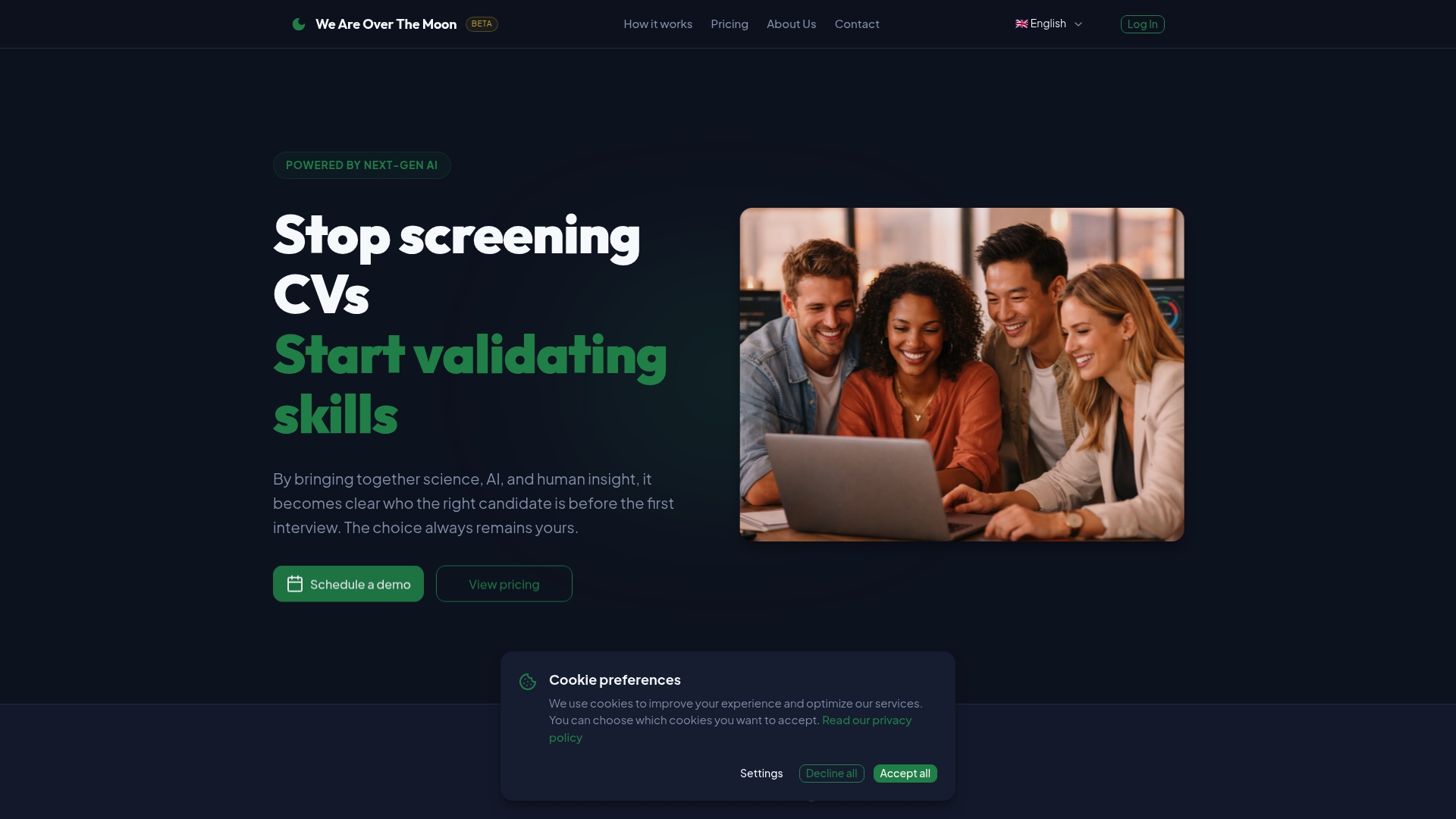
Our AI hiring solutions bring together AI interviews, cognitive tests, company challenges, cultural matching, and video pitches, all designed to give you a fuller picture of every candidate. We built our candidate validation platform specifically for European HR teams who need tools that are effective, compliant, and genuinely fair. We would be over the moon to show you what smarter hiring looks like in practice.
Frequently asked questions
Does AI really reduce bias in recruitment?
AI can improve fairness when implemented with care and regular auditing, but without oversight it often perpetuates biases inherited from historical training data. Human review remains essential.
How do candidates feel about AI interviews?
Many candidates appreciate the innovation, but AI interviews deter over 50% of applicants, particularly women who perceive them as less fair. Research also shows candidates hold mixed views on privacy and transparency in AI-led processes.
Is AI hiring compliant with GDPR in Europe?
AI hiring tools must meet GDPR requirements covering data privacy, transparency, and candidate consent. Data privacy concerns under GDPR apply to every stage of automated candidate processing.
Can AI assess soft skills like humans do?
Not reliably. AI tools show poor assessment of soft skills such as empathy and resilience, which is why human oversight is recommended for any role where those qualities are critical to success.
Recommended
- AI Interviews: Transforming Candidate Assessment in HR | We Are Over The Moon
- How AI reduces bias in recruitment for HR leaders | We Are Over The Moon
- AI in Recruitment – Transforming Candidate Screening and Fit | We Are Over The Moon
- Benefits of AI Assessment: Boosting Recruitment Quality | We Are Over The Moon