Digital interviewing: Streamline hiring with smart assessment

TL;DR:
- Digital interviewing improves recruitment speed and scalability using AI and online platforms.
- Asynchronous formats have high candidate drop-off and potential fairness issues without proper design.
- Combining automated screening with human-led live interviews ensures fairness and effective soft skills assessment.
Digital interviewing can boost employer efficiency by 40 to 67%, yet asynchronous formats see candidate drop-off rates exceeding 50%. That gap tells a fascinating story. For HR professionals and talent acquisition leaders, digital interviewing represents one of the most exciting shifts in modern recruitment. It promises speed, scale, and sharper insights. But it also brings real challenges around fairness, candidate experience, and the risk of over-relying on automation. This article breaks down what digital interviewing actually is, how its various formats compare, where the pitfalls hide, and how to build a strategy that genuinely works for your organisation and your candidates.
Table of Contents
- Defining digital interviewing and its evolution
- Comparing digital interviewing methods: Synchronous and asynchronous
- Addressing AI bias, soft skills, and candidate perceptions
- Best practices for implementing digital interviewing strategies
- A fresh perspective: Where digital interviewing really excels and where it falls short
- Next steps: Enhance your recruitment with digital innovation
- Frequently asked questions
Key Takeaways
| Point | Details |
|---|---|
| Digital interviewing defined | Digital interviewing blends video, AI, and platforms to streamline and modernise recruitment. |
| Synchronous vs asynchronous | Live and recorded digital interviews offer unique benefits, but asynchronous formats pose higher candidate drop-off. |
| Combat AI bias | HR leaders must actively address transparency, bias, and soft skill assessment to ensure fairness and quality. |
| Adopt hybrid strategies | Combining digital and human assessments delivers the best recruitment outcomes in 2026 and beyond. |
Defining digital interviewing and its evolution
Digital interviewing uses technology, including video platforms, AI-driven tools, and online assessment systems, to evaluate candidates remotely. It replaces or supplements traditional face-to-face interviews with structured, scalable, and often automated alternatives. The concept has evolved rapidly. Early digital interviews were simply video calls scheduled through platforms like Skype. Today, they encompass AI-powered assessments, automated scoring, sentiment analysis, and on-demand recorded responses.
The core features that define modern digital interviewing include:
- Asynchronous formats: Candidates record responses to pre-set questions at a time that suits them, with no interviewer present.
- Synchronous formats: Live video interviews conducted in real time, mirroring a traditional interview but remotely.
- AI-driven insights: Automated analysis of responses, tone, language patterns, and even facial expressions.
- Scalability: The ability to screen hundreds of candidates simultaneously without increasing recruiter workload.
- Data-driven decisions: Structured scoring and comparative analytics that reduce subjective judgement.
This evolution has been thrilling for talent acquisition teams. Screening large applicant pools used to take weeks. Now it can take days. But speed comes with responsibility. As AI in recruitment becomes more sophisticated, the stakes around fairness and transparency rise too.
“AI integration has introduced enhanced objectivity and efficiency, but also new risks and ethical concerns that HR leaders must actively manage.”
The promise is real. So is the complexity. Understanding both is the first step toward using digital interviewing well.
Comparing digital interviewing methods: Synchronous and asynchronous
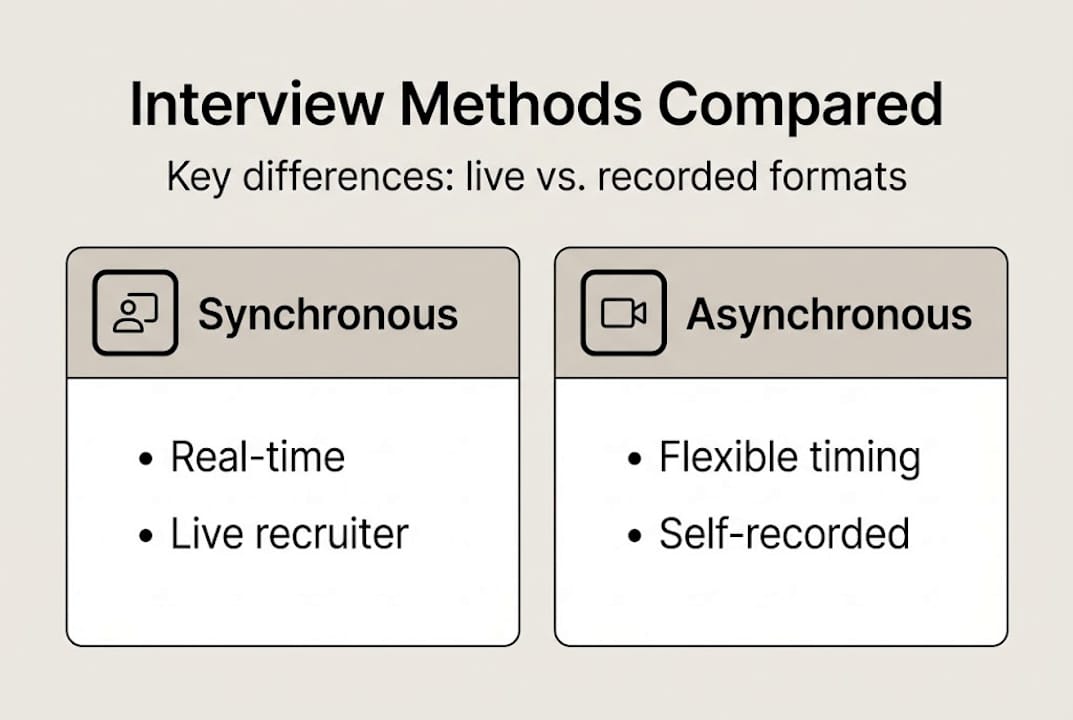
With the fundamentals established, it is crucial to distinguish between digital interviewing modes. Their differences can dramatically impact both efficiency and candidate experience.
| Feature | Synchronous (live) | Asynchronous (recorded) |
|---|---|---|
| Timing | Fixed, real-time | Flexible, candidate-led |
| Interviewer presence | Yes | No |
| Candidate engagement | Higher | Lower |
| Scalability | Moderate | Very high |
| Drop-off risk | Low | High (over 50%) |
| Best for | Later-stage rounds | Initial screening |
Synchronous digital interviews feel familiar. Candidates connect with a recruiter or hiring manager via video, ask questions, and build rapport in real time. They work brilliantly for later hiring stages where relationship-building matters. The downside is scheduling complexity, especially across time zones.
Asynchronous interviews offer remarkable flexibility. Candidates record responses on their own schedule, and recruiters review them when convenient. This dramatically increases throughput. However, over 50% drop-off is a serious concern, particularly affecting women, and research shows asynchronous formats can lower perceived organisational attractiveness. Candidates often feel the format is impersonal or intimidating without a human presence.
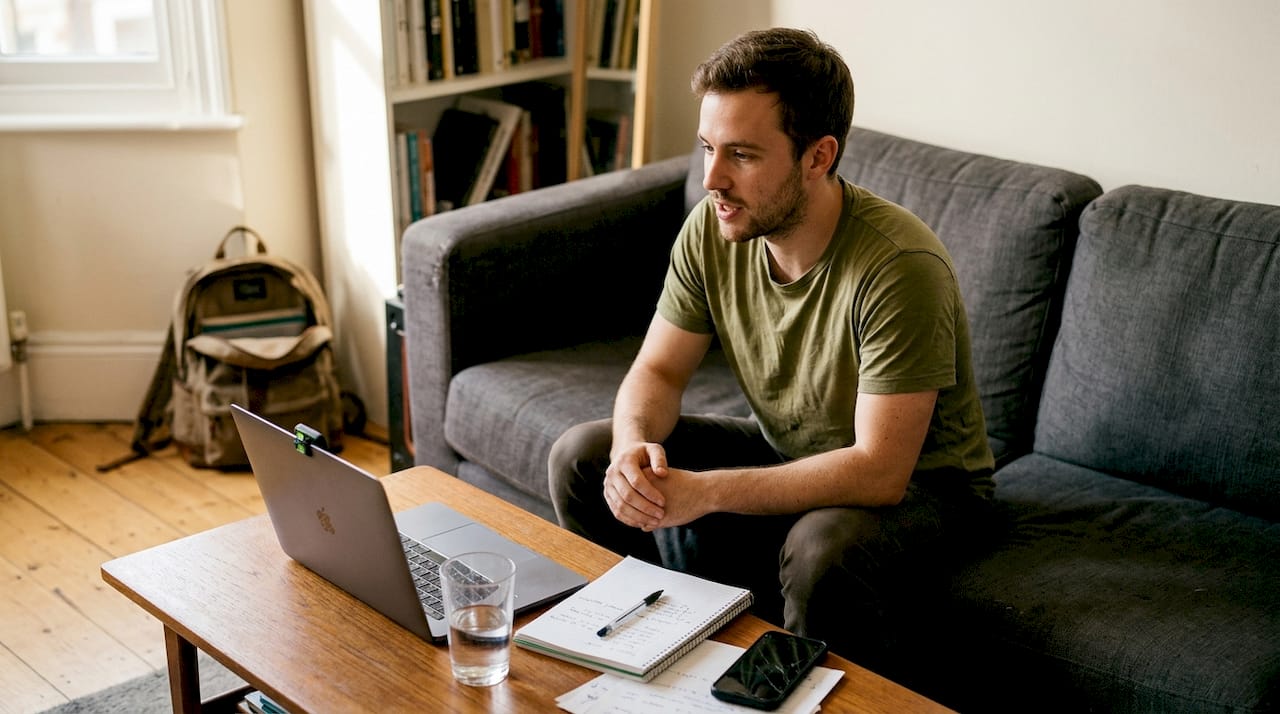
For a practical view of how AI-led formats work in action, exploring AI interview examples can help your team visualise what candidates actually experience.
Pro Tip: Use asynchronous interviews for high-volume initial screening, then transition to synchronous formats for shortlisted candidates. This hybrid approach preserves efficiency while restoring the human connection that keeps strong candidates engaged.
The key is matching the format to the hiring stage. Neither method is universally superior. The best outcomes come from using each where it genuinely fits.
Addressing AI bias, soft skills, and candidate perceptions
The choice of method brings its own hurdles. Understanding pitfalls is key to using digital interviewing effectively and fairly.
AI tools can introduce bias in ways that are subtle and hard to detect. Accent-based bias is a documented risk, where automated systems score candidates lower based on speech patterns rather than actual competence. Data privacy is another concern. Candidates may not fully understand how their recorded responses are stored, analysed, or shared. Transparency is not optional here. It is essential.
Technology access also creates uneven playing fields. Unreliable internet connections, older devices, or unfamiliar platforms can disadvantage candidates who are perfectly qualified but technically under-resourced. This is especially relevant when hiring across diverse geographies or socioeconomic backgrounds.
Assessing soft skills remotely is genuinely difficult. Communication nuance, empathy, and critical thinking are harder to observe through a screen, and nearly impossible to capture through automated scoring alone. Research into measuring soft skills consistently shows that structured human interaction remains the gold standard for these competencies.
Key pitfalls and how to address them:
- AI bias: Audit your tools regularly and ensure diverse training data is used in model development.
- Lack of transparency: Inform candidates clearly about how AI is used in their assessment and obtain explicit consent.
- Technology barriers: Offer technical support and allow alternative submission methods where possible.
- Low engagement in async formats: Keep recorded questions concise and explain the format warmly before candidates begin.
- Soft skill gaps: Reserve competency-based live interviews for roles where interpersonal skills are critical.
Pro Tip: Apply digital interviewing most heavily at screening stages where volume is high and stakes are lower. Preserve high-touch, human-led interviews for final rounds where culture fit and soft skills genuinely determine success.
Being aware of these challenges does not mean avoiding digital interviewing. It means designing your process thoughtfully so that efficiency gains do not come at the cost of fairness.
Best practices for implementing digital interviewing strategies
Being aware of the risks and opportunities is only valuable if it informs better recruitment strategy. Here is how leaders can put digital interviewing to work responsibly.
Stage-specific technology use boosts both efficiency and candidate acceptance. The key is mapping each tool to the right moment in your hiring funnel. A structured rollout makes all the difference.
- Define your objectives: Clarify what you want digital interviewing to achieve. Speed? Consistency? Reduced bias? Your goals shape your tool selection.
- Choose the right platform: Evaluate platforms based on accessibility, AI transparency, and integration with your existing ATS.
- Set candidate expectations early: Send clear instructions, explain the format, and let candidates know how their data will be used.
- Pilot before scaling: Test with a small cohort, gather feedback, and refine before rolling out organisation-wide.
- Collect structured feedback: Ask candidates about their experience after each stage. Use this data to improve continuously.
- Measure impact consistently: Track metrics across every cohort to spot patterns and ensure fairness.
| Metric | What it tells you |
|---|---|
| Completion rate | Candidate engagement and format accessibility |
| Time to hire | Efficiency gains from digital screening |
| Drop-off by demographic | Potential fairness or accessibility issues |
| Candidate satisfaction score | Overall experience quality |
| Offer acceptance rate | Whether the process builds or erodes trust |
Exploring the benefits of AI assessment can help you build a compelling internal case for adoption. And if you are newer to the space, understanding AI interviews in HR from the ground up is a brilliant starting point.
The organisations that succeed with digital interviewing treat it as a living process. They measure, learn, and adjust. That commitment to continuous improvement is what separates good hiring from great hiring.
A fresh perspective: Where digital interviewing really excels and where it falls short
Digital interviewing is not a silver bullet. We have seen organisations chase efficiency metrics and inadvertently hollow out their candidate experience in the process. The efficiency gains are real and genuinely exciting. But over-reliance on automation can quietly erode the human connection that makes candidates choose your organisation over a competitor.
The most underappreciated risk is not AI bias or drop-off rates. It is the slow drift toward treating hiring as a data problem rather than a human one. Asynchronous formats, in particular, may disproportionately disadvantage candidates who are less comfortable performing on camera without a conversational partner. That is not a technology failure. It is a design failure.
What works brilliantly is using digital tools to handle volume intelligently, freeing recruiters to invest real time in the candidates who matter most. Candidate screening with AI is most powerful when it creates space for better human conversations, not when it replaces them entirely. Review your process regularly. Be willing to restore the human touch wherever it genuinely changes outcomes.
Next steps: Enhance your recruitment with digital innovation
Digital interviewing, when designed thoughtfully, transforms what is possible in talent acquisition. You can screen more candidates, reduce time to hire, and surface insights that traditional CVs simply cannot provide.
At WAOTM, we believe recruitment should be built on real assessments, not paper promises. Our digital assessment solutions replace CV screening with AI interviews, company challenges, cultural matching, cognitive tests, and video pitches. Whether you are just getting started or ready to scale, our AI validation platform gives you the tools to hire with confidence. We would love to help you build a process you are genuinely proud of.
Frequently asked questions
What is digital interviewing and how does it work?
Digital interviews use video, AI, and online platforms to assess candidates remotely, offering both live synchronous formats and on-demand recorded responses that candidates complete at their convenience.
Are digital interviews fair to all candidates?
Digital interviews can increase consistency, but AI bias risks, particularly around accents and communication styles, mean fairness requires active auditing and transparent processes.
How can HR leaders avoid high drop-out rates in asynchronous interviews?
Combining stage-specific formats with clear candidate communication and a hybrid approach that includes live rounds significantly reduces drop-off in asynchronous processes.
What are best practices for assessing soft skills in digital interviews?
Structured digital questions work well for initial screening, but hybrid approaches that pair automated tools with live, interactive assessments are far more effective at capturing communication and interpersonal skills accurately.